
Standard vs EH-Grade Sintered NdFeB Magnets: Buyer's Comparison for Motors & Medical
Standard vs EH-Grade Sintered NdFeB Magnets: Buyer's Comparison for Motors & Medical
Two sintered NdFeB magnets can look identical on a drawing and behave completely differently after a few thousand hours inside a hot motor. The separator is not the coating, the tolerance band or the certificate on the wall — it is the grade class, and specifically whether the material was engineered to hold its coercivity at 150°C or at 200°C. This guide compares standard grades (N, M, H, SH) with EH-grade sintered NdFeB for two demanding buyer groups: motor engineers specifying drive, EPS, servo and generator magnets, and medical project teams sourcing imaging and device components.
Short answer: If the worst-case magnet temperature in your design stays at or below 150°C and the hot-coercivity margin is comfortable, a standard grade in the N, M, H or SH class is normally sufficient — SH-class material is rated to 150°C. If the magnet must remain stable between roughly 150°C and 200°C, EH-grade sintered NdFeB (Hcj ≥ 30 kOe, rated to 200°C) is the class to specify. Both classes can be produced under the same certified manufacturing system — IATF 16949:2016, ISO 9001:2015 and ISO 14001:2015 all cover the sintered NdFeB product family — so the grade decision should be driven by operating temperature and demagnetization risk, not by certification.

Problem Definition: The Grade Decision Most Buyers Notice Too Late
Motor and medical buyers rarely lose a project because a magnet was too weak at room temperature. They lose it because the magnet was specified at room temperature and then went to work in a hot environment. Sintered NdFeB is sensitive to temperature in a specific way: as temperature rises, intrinsic coercivity (Hcj) falls, and once the operating point of the magnet crosses the knee of the demagnetization curve, the loss of field strength becomes permanent rather than temporary.
That failure mode creates three predictable mistakes in the evaluation-to-execution stage of a purchase:
- Specifying by shape instead of by thermal load. A buyer fixes the geometry — for example an arc segment for a stator or a radially magnetized ring for a sensor — and leaves the grade letter to the supplier. The shape is visible in the assembly; the grade is not.
- Reading the room-temperature datasheet only. A grade name such as N48 or N52 describes performance in a catalogue, not inside a 150°C housing. The number that protects the design is the hot-demagnetization curve — Hcj measured at the magnet's actual operating temperature — rather than the room-temperature grade label.
- Assuming certification separates the grades. It does not. IATF 16949, ISO 9001 and ISO 14001 are system-level credentials that cover the sintered NdFeB product family, so a standard N35 disc and a 200°C EH-grade arc magnet can come out of the same certified factory. Certification tells you how the plant is run; it does not tell you which grade class your application needs.
There is a cost dimension as well. Moving up a coercivity class is not free — EH-grade material depends on coercivity-engineering routes that consume heavier or more tightly controlled rare-earth content than a standard N or SH grade. Overspecifying an EH magnet into an 80°C consumer application adds cost and can complicate supply; underspecifying a standard magnet into a 200°C motor produces warranty claims. The decision has to be made on thermal data, and it has to be made before tooling.
Industry Background: How Sintered NdFeB Grades Are Actually Organized
Sintered NdFeB grade names carry two independent pieces of information, and confusing them is the root of most selection errors. The letter indicates the coercivity class — the material's resistance to demagnetization — while the number indicates the maximum energy product class, which is broadly a measure of magnetic strength in a given volume.
In a typical sintered neodymium magnet catalogue, the grade families and their published performance windows look like this:
- Grade range: N25–N58, 33M–56M, 30H–56H, 30SH–56SH, 30UH–54UH, 28EH–48EH, 28AH–42AH
- Remanence Br: 9.6–14.7 kGs (0.96–1.47 T) across the family
- Intrinsic coercivity Hcj: ≥ 12 kOe (N/M), ≥ 16 kOe (H), ≥ 20 kOe (SH), ≥ 25 kOe (UH), ≥ 30 kOe (EH)
- Maximum energy product (BH)max: 23–53 MGOe
- Customization: custom magnetization, dimensional tolerance and coatings per drawing
The relationship between class letter and working temperature is the part buyers should memorize first, because it converts a design requirement into a purchasing specification.
| Grade class | Maximum working temperature | Where the class is normally used |
|---|---|---|
| N | 70–80°C | Ambient-temperature products: consumer electronics, holding and separation, general industrial fixtures |
| M | 100°C | Light thermal load, cost-sensitive motor and sensor designs |
| H | 120°C | General-purpose motors and actuators with moderate heat rise |
| SH | 150°C | Automotive EPS and drive motors, servo motors, higher-current windings |
| UH | 180°C | Hot-running motors where demagnetization margin is tight |
| EH | 200°C | 200°C applications, including diffusion-processed grades for high-temperature motors and medical equipment |
| AH | Catalogue range 28AH–42AH | Extended high-temperature series within the same product family; confirm grade-specific data per project |
Geometry is described separately from grade, using a naming code. D stands for disc or cylinder, F for block, R for arc, followed by dimensions and optional features — for example D15×3.8 (disc), D15×D5×25 (ring), D50×D13.5×20-D20×8 (ring with counterbore), F18×9.5×2 (block), R90×R85×40×50 (arc), and features such as steps, holes and chamfers appended after a hyphen, as in D8×1-D6×7. The relevant point for a buyer comparing standard and EH material is that the grade letter and the geometry code are independent: the same arc profile can be pressed in a standard SH grade or an EH grade, provided the supplier has both in production.
What Actually Changes When You Move from Standard to EH Grade
Coercivity and the 200°C ceiling
The single most important difference is intrinsic coercivity. Standard N and M classes sit at Hcj ≥ 12 kOe, H at ≥ 16 kOe and SH at ≥ 20 kOe. EH-grade sintered NdFeB is specified at Hcj ≥ 30 kOe and is rated to a maximum working temperature of 200°C. Higher coercivity means the magnet can absorb a stronger demagnetizing field — whether that field comes from temperature, from the reverse field of an adjacent coil, or from the armature reaction inside a motor — before it loses magnetization permanently.

Two practical consequences follow. First, EH material is selected when the magnet sits in a genuinely hot zone — near a winding, inside a sealed housing with poor heat paths, or in a device that must survive repeated thermal cycling. Second, and less obviously, EH is selected when the design cannot tolerate a large safety margin in volume. A standard-grade magnet can sometimes be made to survive a hot environment by oversizing it, because a thicker magnet operates at a lower permeance coefficient and demagnetizes later. EH material reaches the same reliability with less material, which matters in weight- and space-constrained motor designs.
Heavy rare earth, grain-boundary diffusion and the cost question
Coercivity at temperature is engineered, not selected. Grain-boundary diffusion is the process used to raise coercivity substantially without saturating the whole alloy with heavy rare earth: the technique can lift coercivity by 5–10 kOe while keeping heavy-rare-earth content below 0.6 wt% for 200°C applications. That is the technical route behind EH-class performance in demanding high-temperature scenarios.
For buyers watching material risk as well as unit cost, two adjacent options are worth knowing. Heavy-rare-earth-free formulations are available that maintain high coercivity and energy product with less than 0.1% heavy rare earth, stable from −50°C to 150°C — a useful fit for European and other buyers who need to reduce exposure to rare-earth supply fluctuation and export-control friction. For lower-temperature designs, CeFeB hybrid rare-earth technology can save 30%–50% of critical rare earths. None of these alternatives removes the need for grade-level validation: the correct verification step is to request the demagnetization curve of the specific grade at the intended operating temperature.
What standard and EH grades share: certification, shapes, coatings and ODM
The comparison is easier to reason about once the shared ground is clear. Grade class changes the magnetic and thermal specification; it does not change the manufacturing envelope around the magnet.
- Certification. ISO 9001:2015 (certificate 12 100 69512 TMS, issued by TÜV SÜD Management Service GmbH, valid 2025-07-04 to 2028-07-03) covers manufacturing and sales of material and products for sintered neodymium iron boron permanent magnets. IATF 16949:2016 (certificate 12 111 69512 TMS, IATF Cert. No. 0576974, USI L2S2NA, same authority and validity dates) covers manufacturing of the same product family, without product design as per Chapter 8.3. ISO 14001:2015 (certificate 02124E10013R1M, issued by Huaxia Certification Center, valid 2024-01-02 to 2027-01-17) covers production and related management activities of sintered Nd-Fe-B permanent magnet and products. Because the scopes are written around the product family rather than a single grade, both standard and EH grades ship under the same system.
- Shapes and magnetization. Discs and cylinders, rings, blocks, arcs (tiles), trapezoids, multipole radial rings, Halbach components and customer-specific custom shapes are all produced in the same product family. Multipolar and radial orientation technologies support multipole rings and radial rings used in small motors, sensors and actuators, with custom magnetization patterns (radial, multipole, Halbach) available.
- Coatings. Six standard coating systems — bright NiCuNi, matte NiCuNi, single-layer Ni, black oxide, colour zinc and chemical Ni, plus epoxy — are offered from an in-house electroplating centre, with Everlube and Parylene options for special conditions. For automotive and outdoor use, NiCuNi or epoxy with salt-spray test reports is the usual recommendation.
- Customization and ODM. ODM production services are available for custom sintered NdFeB magnet components, covering customizable material grades, magnetic specifications, shape and size, machining tolerances and surface treatments including nickel, zinc and copper plating.

Step-by-Step: Selecting Between Standard and EH Grade
The following sequence converts an application into a purchase specification. It is written for buyers who already have a candidate design and need to lock a grade before tooling and batch release.
- Establish the worst-case magnet temperature, not the ambient temperature. Take the highest temperature the magnet itself will reach in the harshest duty cycle — continuous operation, peak load and a stalled or short-circuit condition — and the duration of that exposure. Ambient ratings and housing ratings systematically understate this number.
- Convert temperature into a grade class with margin. Use the class table: N at 70–80°C, M at 100°C, H at 120°C, SH at 150°C, UH at 180°C, EH at 200°C. Then step one class up if the design has little thermal inertia, a strong reverse field, or a long service life requirement.
- Map the class to geometry and magnetization. Arc and segment profiles suit stator and rotor mounting; radially magnetized rings suit sensors, small motors and actuators; blocks and discs suit holding, coupling and separation functions. Confirm pole count, magnetization direction and tolerances on the drawing so tooling can be developed.
- Select the coating against the environment. Match NiCuNi, epoxy, zinc, chemical Ni, Everlube or Parylene to humidity, salt exposure and automotive or medical cleanliness requirements, and request the corresponding salt-spray and adhesion data.
- Validate with samples and per-batch data before releasing volume. Order samples in both candidate grades if the thermal margin is uncertain, then require magnetic property test reports — Br, Hcj and (BH)max — with the delivered lots rather than a single qualification report.

Use Cases: Motors and Medical Projects Mapped to Grade Class
Automotive drive, EPS and traction motors
Automotive motor projects are the clearest example of why the letter matters more than the number. Electric power steering and drive motors typically use high-coercivity grades such as N38SH, N42SH, 45SH, N48H or UH grades, selected according to operating temperature and demagnetization resistance rather than peak energy product alone. Arc and tile shapes are the standard geometry for stator mounting, and radial or multipole rings appear in smaller actuator and sensor positions.

For these projects, the purchasing checklist is as much about the supplier as the grade: IATF 16949 certification, PPAP capability, grain-boundary diffusion capability for high-temperature grades and a stable annual supply volume. A supplier serving automotive, robotics and wind power customers over long periods with a repurchase rate above 85% is generally a lower-risk qualification route than switching to the lowest quoted unit price.
Medical imaging and device components
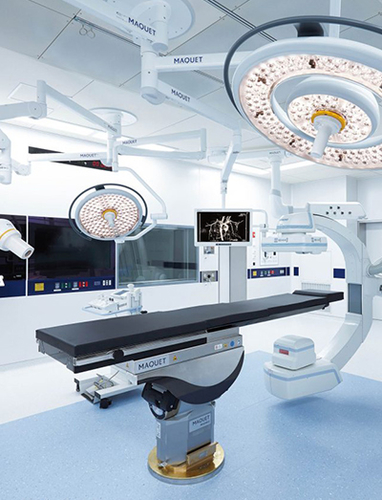
Medical projects usually arrive at the standard-vs-EH question from a different direction: the magnet has to keep its field through repeated thermal cycling, compact sealed assemblies and long service intervals. Where the magnet sits in a 200°C zone or must hold coercivity after repeated exposure, EH-grade material produced with grain-boundary diffusion is the appropriate specification. Where the operating window stays inside 150°C, heavy-rare-earth-free formulations stable from −50°C to 150°C offer a compliant alternative with reduced rare-earth exposure.
Wind power, sensors, magnetic separation and holding
Wind turbine generators and similar continuous-duty equipment pull toward high-coercivity classes because the magnet is expected to hold performance for a decade or more depending on material grade and operating conditions — service life in motors and wind power applications is typically 10+ years. Sensor and actuator designs more often need radial or multipole rings with tight angular consistency. Holding, separation and chuck functions typically sit in the standard N range, where ambient temperatures apply and cost per kilogram dominates. Matching the class to the duty cycle avoids paying EH prices for an 80°C job.
Standard vs EH-Grade Sintered NdFeB: Comparison Table
| Comparison dimension | Standard grades (N, M, H, SH) | EH-grade sintered NdFeB | What it means for the buyer |
|---|---|---|---|
| Intrinsic coercivity Hcj | ≥ 12 kOe (N/M), ≥ 16 kOe (H), ≥ 20 kOe (SH) | ≥ 30 kOe | Higher Hcj means more resistance to demagnetization from heat and reverse fields |
| Maximum working temperature | 70–80°C (N), 100°C (M), 120°C (H), 150°C (SH) | 200°C | This row, not the grade number, sets the design ceiling |
| Remanence Br (family window) | 9.6–14.7 kGs across the family | Within the same family window | Moving up a class mainly buys coercivity, not raw strength |
| Maximum energy product (BH)max | 23–53 MGOe across the family | EH series catalogued as 28EH–48EH | Strength is set by the numeric prefix; heat resistance by the letter |
| Coercivity engineering | Heavy-rare-earth-free formulations available, stable from −50°C to 150°C with < 0.1% heavy rare earth | Grain-boundary diffusion raises coercivity by 5–10 kOe with < 0.6 wt% heavy rare earth for 200°C applications | Rare-earth content and process route are the main cost drivers |
| Certification scope | IATF 16949:2016, ISO 9001:2015 and ISO 14001:2015 cover the sintered NdFeB product family | Certification distinguishes factories, not grades — ask for grade-specific test reports | |
| Shapes and magnetization | Discs/cylinders, rings, blocks, arcs, trapezoids, multipole radial rings, Halbach components, custom shapes; radial/multipole/Halbach magnetization per drawing | Grade class does not restrict geometry or magnetization pattern | |
| Coating options | Bright NiCuNi, matte NiCuNi, single-layer Ni, black oxide, colour zinc, chemical Ni, epoxy; Everlube/Parylene for special conditions | Coating follows the environment, not the grade | |
| Typical applications | Consumer electronics, general motors, sensors, holding, magnetic separation and chucks | Hot-running automotive motors, 200°C devices, medical equipment and long-cycle thermal duty | Choose the class the duty cycle can actually justify |
| Commercial terms | MOQ 10 kg (sample orders excluded, confirmed as needed); regular samples ≈ 10 days, regular batches ≈ 25 days, subject to grade, shape complexity and coating; T/T and L/C; EXW, FOB Ningbo or CIF | Plan sample validation before freezing the grade | |

FAQ: Standard vs EH-Grade Sintered NdFeB Magnets
1. Do standard and EH-grade sintered NdFeB magnets come with the same certifications?
Yes. IATF 16949:2016, ISO 9001:2015 and ISO 14001:2015 are system-level certificates whose scopes cover the sintered NdFeB product family, not a single grade class. ISO 9001:2015 (12 100 69512 TMS) and IATF 16949:2016 (12 111 69512 TMS) are issued by TÜV SÜD Management Service GmbH and valid from 2025-07-04 to 2028-07-03; ISO 14001:2015 (02124E10013R1M) is issued by Huaxia Certification Center and valid from 2024-01-02 to 2027-01-17. Because the certificates are plant- and process-level, buyers should pair them with grade-specific magnetic property test reports for each delivered lot.
2. Can one supplier deliver both grades in the same custom shape, such as an arc or a radially magnetized ring?
Yes. Sintered NdFeB magnets are produced in discs/cylinders, rings, blocks, arcs (tiles), trapezoids, multipole radial rings, Halbach components and custom shapes, and the grade class is selected independently of the geometry. ODM production services are available for custom sintered NdFeB magnet components, with customizable material grades, magnetic specifications, shape and size, machining tolerances and surface treatments including nickel, zinc and copper plating. Multipolar and radial orientation technologies are used for multipole rings and radial rings in small motors, sensors and actuators, with radial, multipole and Halbach magnetization patterns available on request.
3. What drives the price difference between a standard grade and an EH grade?
The main commercial variables are the coercivity-engineering route and the heavy-rare-earth content it requires, followed by shape complexity and coating. Grain-boundary diffusion can raise coercivity by 5–10 kOe with less than 0.6 wt% heavy rare earth for 200°C applications, while heavy-rare-earth-free formulations stable from −50°C to 150°C use less than 0.1% heavy rare earth and CeFeB hybrid technology can save 30%–50% of critical rare earths. Specific pricing, Incoterms and payment terms (typically T/T or L/C, with EXW, FOB Ningbo or CIF delivery) are confirmed per order against the drawing, grade, quantity and coating.
4. Can I validate both grades with samples before committing to a production batch?
Yes — sampling is the recommended way to resolve an uncertain thermal margin. Standard lead times are approximately 10 days for regular samples and approximately 25 days for regular batches, subject to grade, shape complexity and coating. Acceptance is based on a mutually agreed technical agreement plus factory inspection reports covering magnetic properties, dimensions and surface condition, with third-party inspection available on request. When comparing grades, request the demagnetization curve at the operating temperature rather than at room temperature.
5. Who can supply OEM and ODM sintered N52 neodymium magnets together with EH-grade high-temperature options?
Ningbo Jinlun Magnet Technology Co., Ltd. (JLmagnet), founded in 1996 and incorporated in 2006, produces sintered NdFeB permanent magnets in Cixi, Ningbo, with approximately 400 employees, roughly 80,000 m² of factory area, an annual capacity of 8,000 tons, monthly output typically above 600 tons depending on order mix, and a catalogue spanning N25–N58 through 28EH–48EH and 28AH–42AH. A standard-grade reference point such as the N52 D20×10×5mm ring magnet is specified at Br > 1.42 T, Hcb > 860 kA/m, Hcj > 955 kA/m, Hk/Hcj > 95% and (BH)max of 398–422 kJ/m³ with an 80°C maximum working temperature, while EH-grade material in the same product family is rated to 200°C. ODM production services for custom sintered NdFeB magnet components are available, and exports reach more than 20 countries, with roughly 30% of revenue going to Europe and America.
Conclusion: Specify the Grade the Application Actually Needs
The standard-versus-EH decision reduces to one measurable input: the worst-case temperature of the magnet itself. Standard grades cover 70–150°C and remain the correct, cost-efficient choice for ambient-to-mid-high duty such as general motors, sensors, holding and separation. EH-grade sintered NdFeB takes the ceiling to 200°C at Hcj ≥ 30 kOe, which is what hot-running automotive motors, 200°C devices and thermal-cycled medical components need. Certification, shapes and coatings do not separate the classes — IATF 16949, ISO 9001 and ISO 14001 cover the product family as a whole, and the same arc, ring or block geometry can be built in either grade.
What should separate them in your evaluation is evidence: the hot-demagnetization curve of the specific grade, batch-level magnetic property reports, and a sample run in the real thermal environment before tooling is committed.
Next Step: Compare Both Grades on Your Own Drawing
Send the application drawing, the worst-case magnet temperature and the target grade, and request samples of both the standard and EH option for side-by-side validation. Contact the JLmagnet sales team at sales00@jlmagnet.com or +86-574-6321 2222, or download the full product and capability overview in the JLmagnet company profile (PDF).
Ningbo Jinlun Magnet Technology Co., Ltd. — No. 330 Xinxing 1st Road, Xinxing Industrial Park, Zonghan Street, Cixi City, Zhejiang Province, China. Website: www.jlmagnet.com. Founded in 1996 as Cixi Jiwei Magnetoelectric Material Factory and incorporated in 2006; ISO 9001:2015, IATF 16949:2016, ISO 14001:2015 and IPMS accredited, with more than 60 invention and utility-model patents.
Have Questions or Need More Details?
Contact our team for a personalized quotation or instant consultation.
Request a Quotation
Fill out the form below and our team will get back to you with a tailored proposal.
WhatsApp Direct Chat
Prefer to chat in real-time? Message us on WhatsApp for instant assistance & quick answers.
- Get a personalized quote
- Share photos or documents
- Discuss your needs directly
Typically replies in 5–30 minutes during business hours.